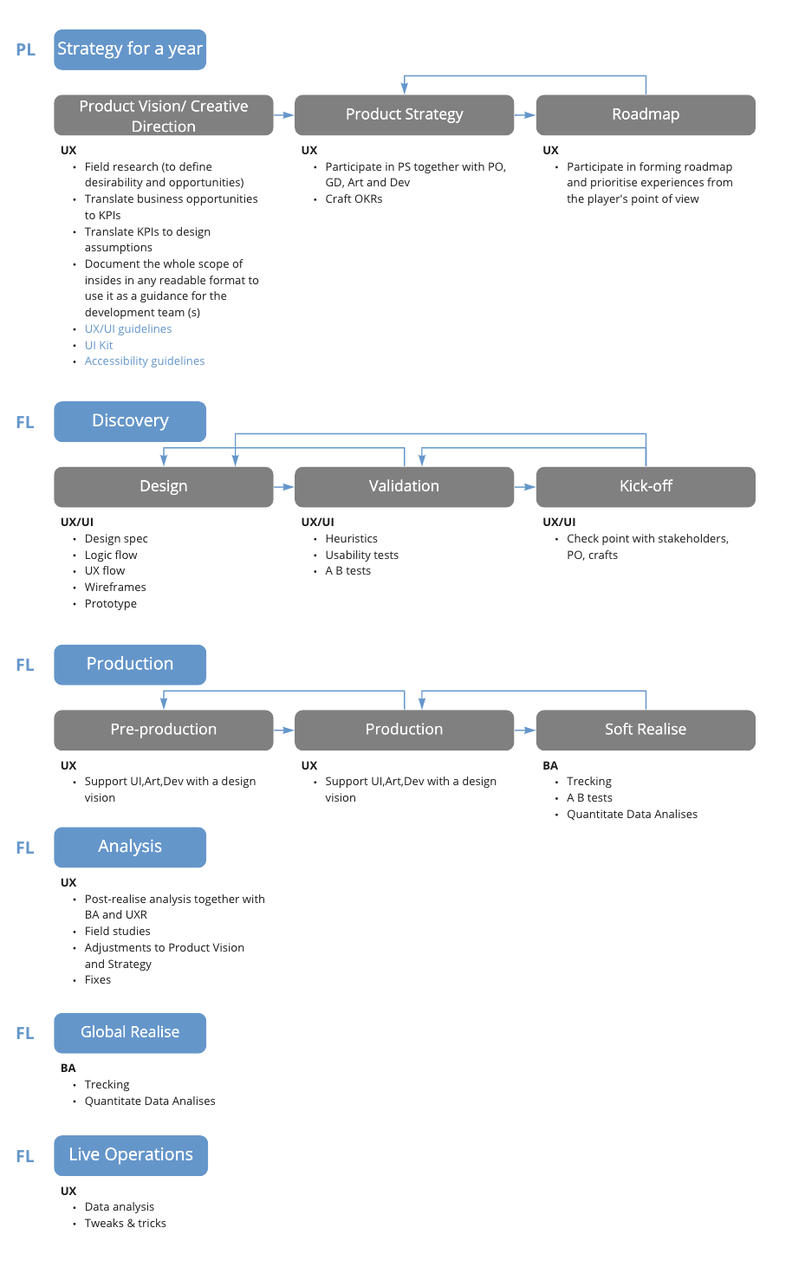
the DESign process
Production Design Process
This framework represents a scalable, high-level approach to design that can be adapted across products and game experiences.
The process is structured into two core phases: Discovery and Design.
- The Discovery phase is focused on building a deep understanding of player behaviour, needs, and context, enabling teams to identify meaningful opportunities and define the right problems to solve.
- The Design phase translates these insights into solutions through ideation, prototyping, and continuous validation. Iterative testing ensures that design decisions are informed, effective, and aligned with both player expectations and business goals.
The choice of research methods and design tools is flexible and context-dependent, allowing teams to adapt their approach based on the scale, complexity, and maturity of each game or feature.

UX Team
Establishing a strong UX function is a key driver of product success, enabling teams to deliver innovative, player-centric experiences aligned with both market needs and business objectives.
UX designers and researchers provide critical insights into player behaviour, helping organisations make informed decisions and prioritise the right opportunities.
When effectively embedded within product teams, UX contributes to:
- Driving revenue growth and optimising conversion
- Improving player retention and reducing churn
- Increasing development efficiency through early validation
- Elevating player satisfaction and overall experience quality
- Reducing the risk of investing in low-value or misaligned solutions
DESIGN deliverables
UX deliverables form a flexible toolkit that supports product development, from discovery through to delivery. Not all artefacts are necessary in every context; their value depends on the product’s scope, complexity, and maturity.
Empowering UX teams to define the most appropriate methodologies and outputs ensures that effort is focused where it delivers the greatest impact.
Deliverables should be produced within a structured flow, enabling informed decision-making, cross-team alignment, and efficient progression from insight to execution.
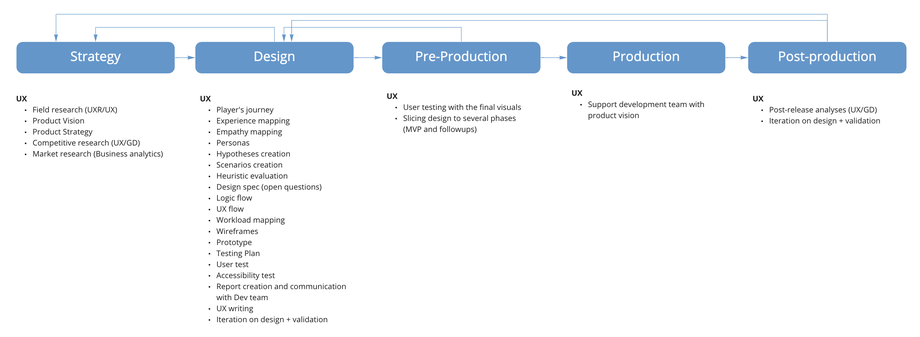
iterative DESIGN
Iteration is fundamental to both new and live game development, enabling continuous improvement through validation and feedback.
It streamlines delivery, reduces risk, and keeps teams focused on the overall product experience rather than individual deliverables.
Milestones and Validation
The development lifecycle should be structured around meaningful milestones that reflect both business goals and player value.
Each milestone serves as a validation point for gameplay and usability, informed by player research and testing.
Continuous validation with real players reduces risk, while clear communication of insights enables teams to make informed, aligned decisions.

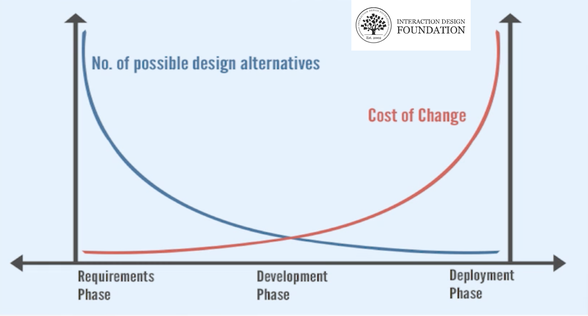
From the Interaction Design Foundation
new game production pipeline
New game production is a dynamic, iterative process that relies on close collaboration within a small, highly skilled, cross-functional team.
The pipeline is structured around key pillars, each representing a critical stage in development and supported by tailored design deliverables.
Within each pillar, sub-components define the specific activities and outputs required to ensure alignment, reduce risk, and drive the product toward a successful outcome.


Live game production pipeline
Live game development generally follows a more linear, waterfall-style process. However, complexity often arises due to simultaneous feature development and interdependent workflows.
Effective management of dependencies, resource allocation, and cross-functional collaboration is critical to maintaining smooth operations, optimising delivery, and sustaining high-quality player experiences over time.